






A Museum About the Past That Keeps Moving With Time
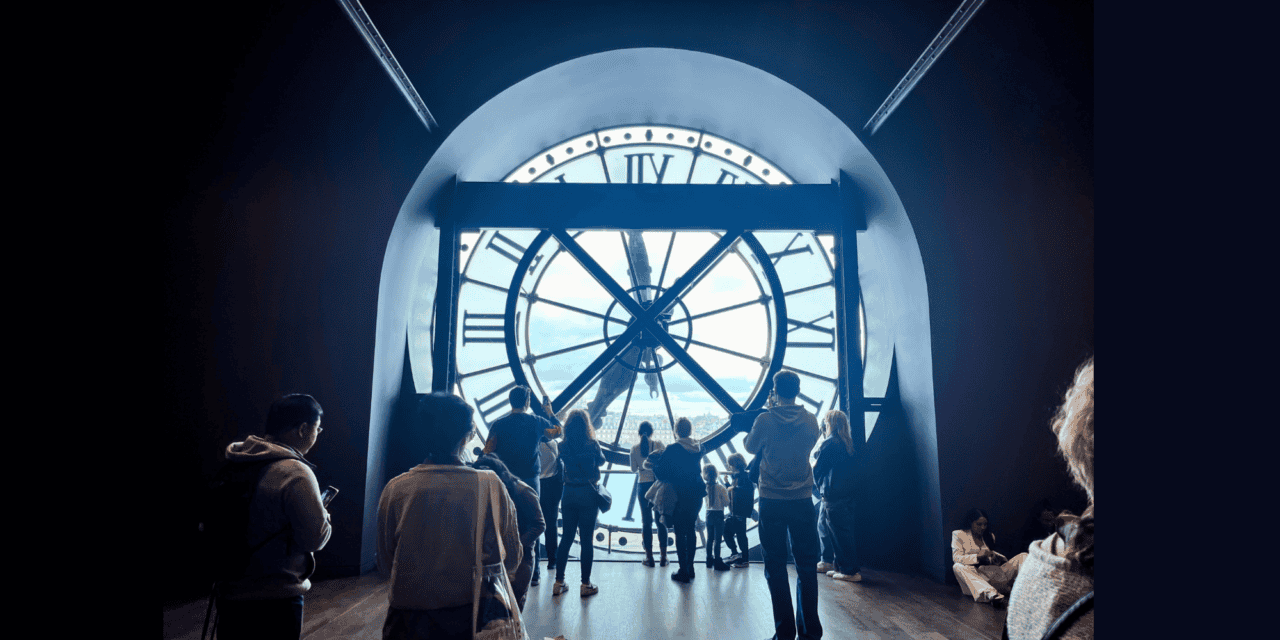
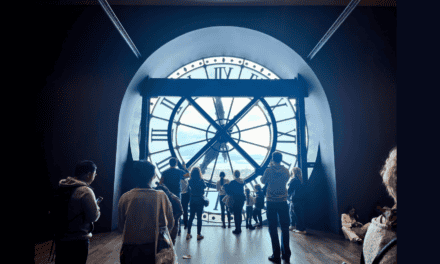
There’s a fun contradiction here: you walk into a museum to look backward—to art from another century—but you’re standing inside a former railway station, Gare d’Orsay, underneath enormous clocks that were literally built to keep people moving forward and, more importantly, on schedule. Nearly forty years after it became a museum, people are still standing beneath those clocks… except now we’re stopping… to look.
Then again, we actually ended up at Musée d’Orsay partly because we didn’t have enough time for the Louvre (oooh, see what I did there?). It turned into an experience we really enjoyed, making time, once again, the unlikely culprit behind this post.
40 Years of Art, Culture & Reinvention
There was already something unusual about Orsay long before it became a museum. The railway station was built for the 1900 Paris Exposition, a massive world’s fair celebrating the achievements of the past while showing off what the new century might bring. Then, when Musée d’Orsay opened in 1986, it wasn’t meant to be just another home for paintings and sculptures. Photography, architecture, decorative arts, music, literature and even audiovisual works were part of the idea—basically, a much bigger snapshot of an era.
Now Musée d’Orsay is celebrating its 40th anniversary, after 240 exhibitions, nearly 55,000 works added to its collections and more than 140 million visitors since opening. And it isn’t exactly sitting still at 40. The second half of 2026 brings anniversary programming, new rooms, restorations, performances and exhibitions—a fitting next chapter for a building that has already gone from train station to museum and somehow made both identities part of the experience.
Our Experience: From Bordeaux to Orsay
We’d just arrived in Paris from Bordeaux, so after several days where wine had understandably taken center stage, our afternoon at Orsay was a bit of a change of pace. Then again, wine and art aren’t that far apart—and nah, this is not the Chardonnay I’m sipping right now talking. Both have a funny way of making you slow down, look—or taste—a little closer, and appreciate something that came from a completely different time and place.
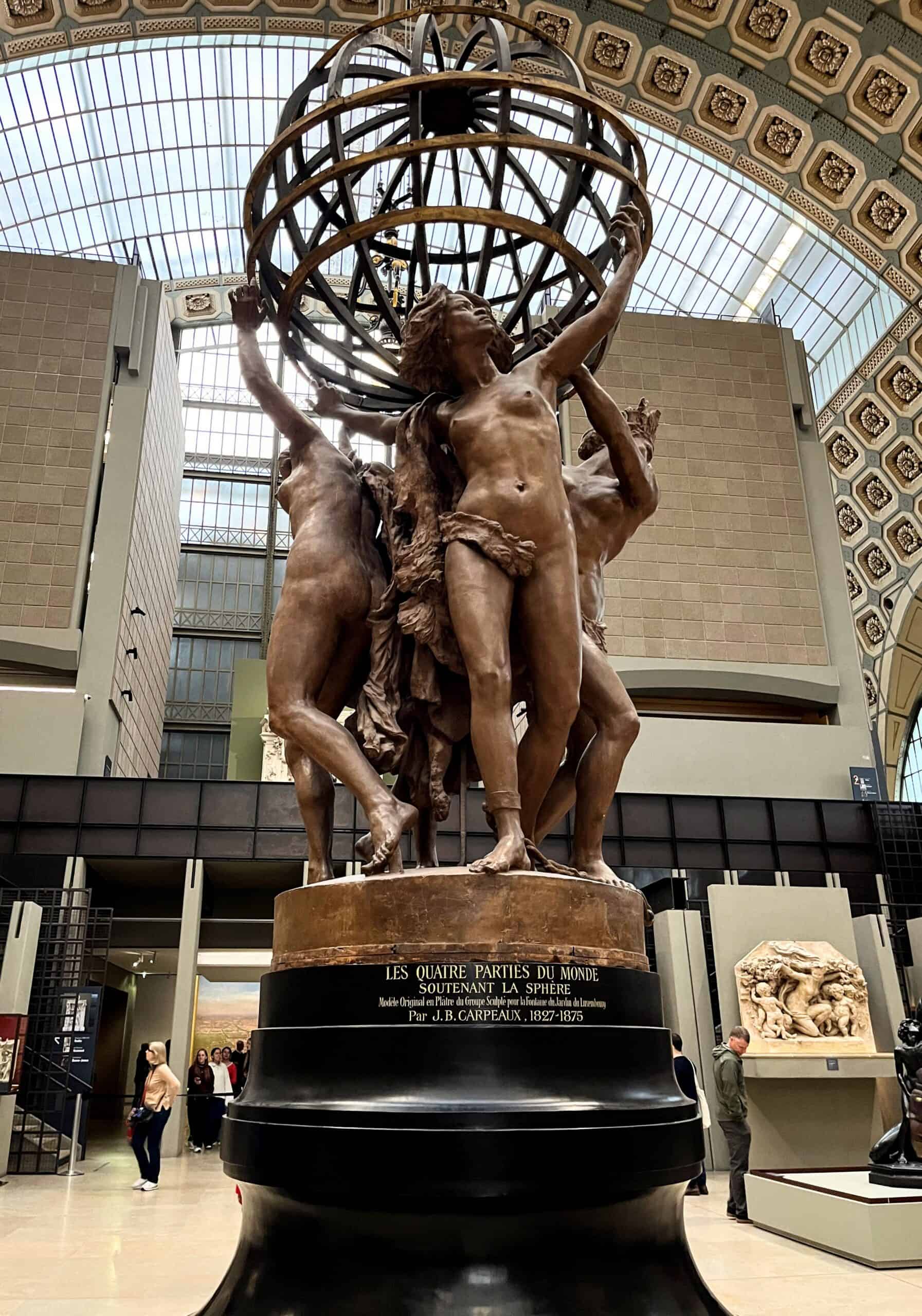
Upon entering, we were greeted by one beautiful sculpture after another: Les Quatre Parties du Monde soutenant la sphère céleste, Sapho, works by Barye, Napoléon, Hébé endormie, Virgile, among others. Even the main hall felt like more than just a space connecting one work to the next. People were sitting around, walking, talking, taking pictures, and somehow the architecture in the background kept competing for my attention. I was glad this was one of those museum days when I actually recognized some of the works—and the ones I didn’t know were just as nice to stop by and meet.
There were so many helpful people throughout the museum, and I truly loved every moment of the experience. I got to see pieces I had really wanted to see in person, while also discovering plenty I didn’t know much about before. I couldn’t have been more grateful that this is where our limited time in Paris ended up taking us.
If These Clocks Could Talk…
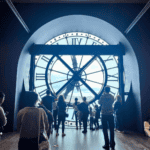
Turn around: clock. Turn again: another clock. Why all these clocks? Of course, they aren’t there by accident—as mentioned earlier, they’re remnants of Gare d’Orsay’s first life as a railway station, with enormous illuminated clocks built right into the architecture, including one measuring about six meters across. They were important enough to be restored and preserved when the station became a museum, although at some point I wasn’t sure if the universe—or God—was indirectly trying to tell me to make more time for myself or simply organize it better. Maybe both. Or maybe the workers wanted to remind us all when to leave #initalthought.
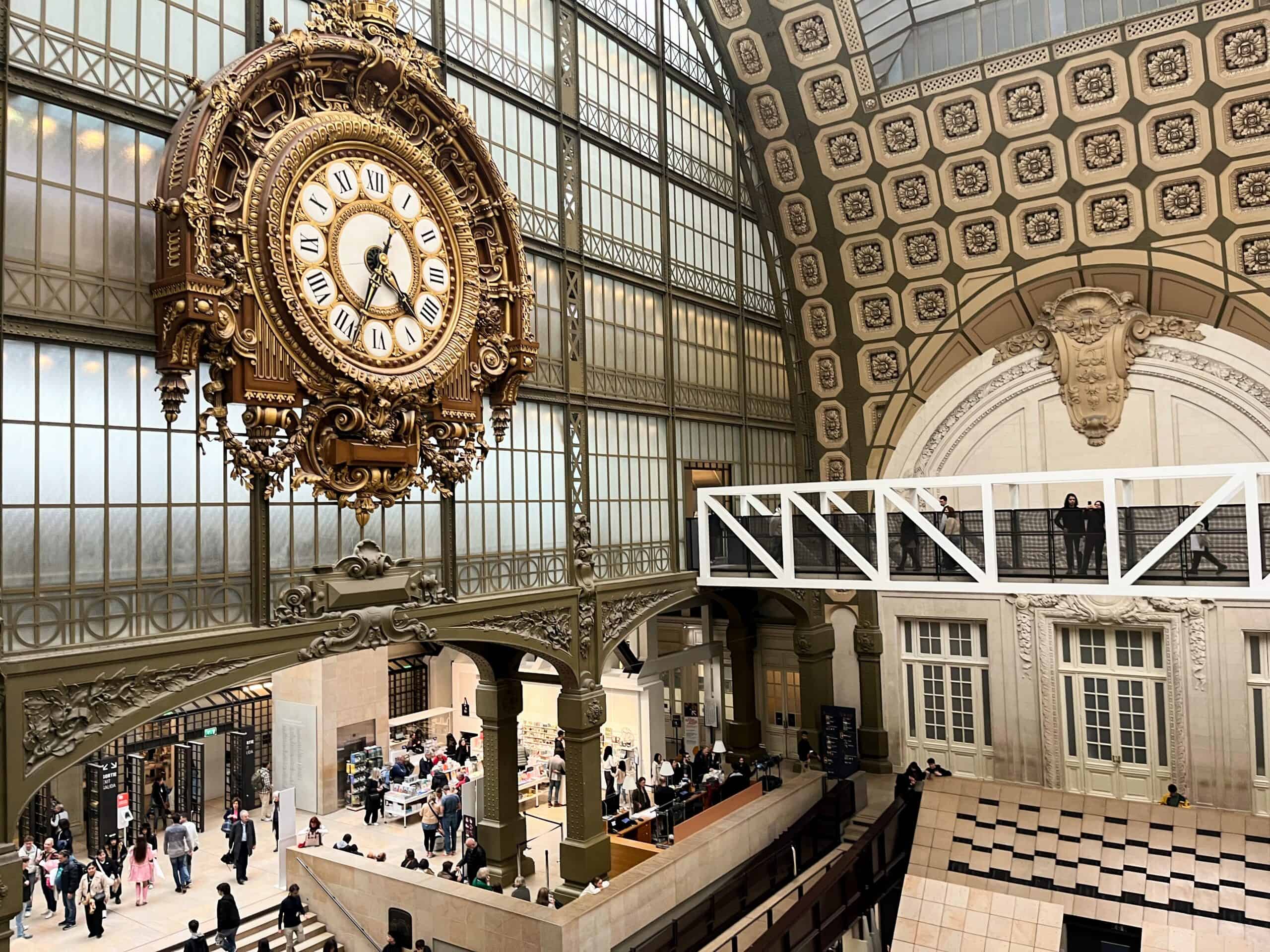
And if those clocks really could talk, they would have quite a few stories worth having a sip over—wine or tea, people; I like tea too. Orsay has been through a lot. After its days as a functioning station, the building was used to send parcels to prisoners during the war and later welcomed prisoners returning after Liberation. At one point, it even became a movie set for Orson Welles’ The Trial, and somehow also found time to house a theater company and auctioneers. Talk about changing careers! But perhaps the craziest part is that it almost didn’t survive at all: there were plans to demolish the old station and replace it with a modern hotel. #Thankfully, that never happened. The building was eventually protected as a historic monument and given yet another life—this time as the museum we know today.
Quite the timeline: train station → wartime uses → movie set → theater → auction space → almost a hotel → museum.
A Nice Interesting Visit
For all the history packed into Orsay, though, I think that’s part of what made being there so interesting. You aren’t just walking around looking at what the museum holds; every once in a while, the building itself makes you stop and look at where you’re standing. And apparently, it did that to me more than I expected.
Not gonna lie, though: my brain fully expected wine to be served somewhere in this museum… I’m not even sure why. Maybe because I’d attended other exhibitions where that was part of the experience, or maybe Bordeaux had spoiled me by that point. Either way, no glass of wine magically appeared (and I was not disappointed). What did surprise me was how much time I spent looking at the museum itself. I went in expecting the artwork to be the focus, but the clocks, the old station, the light coming through the glass and the views over Paris became part of the exhibition in their own way. And maybe that’s what I remember most: going somewhere to look at pieces from the past and realizing that the building carrying them through time was just as interesting.