



When Tradition Meets Heat: Will Burgundy Continue Refusing to Blend?
The Myth of the Grape
Ask the average wine drinker what they love, and chances are they’ll name a grape: “I’m a Pinot person,” or “I usually go for Cabernet.” But in France, including Burgundy, that’s not how the story goes. In fact, that kind of thinking might earn you a raised eyebrow.
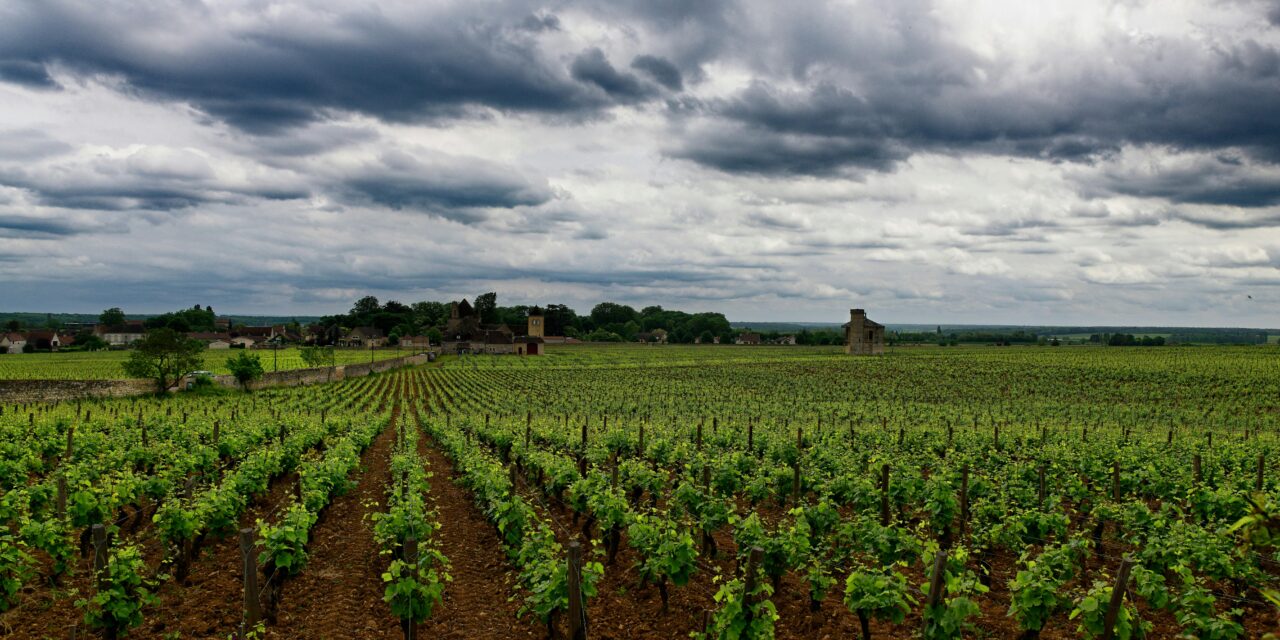
In France, wine is rarely understood through the grape alone—the place matters just as much, and often more. A bottle of Bourgogne speaks of the slope it came from, the soil beneath the roots, and the conditions that shaped the vintage. The grape matters, but Burgundy wants you to know where it grew.
Contrast that with Bordeaux, where blending is not just tradition—it’s an art form. Winemakers combine Merlot, Cabernet Sauvignon, and other grapes to build complexity and create layered, balanced wines. In Burgundy, the philosophy moves in another direction: focus over fusion. The idea is to let one grape and one place speak clearly, revealing differences that might otherwise disappear in a blend.
Here, Pinot Noir and Chardonnay reign supreme, and Burgundy has built much of its identity around what these two grapes can reveal from one vineyard to the next. So the answer to our opening question isn’t simply “Pinot” or “Chardonnay.” In Burgundy, knowing the vineyard, grower, and specific slope can tell you far more about what you’re about to drink.
Burgundy’s Monastic Roots: Where It All Began
Long before Burgundy became the darling of sommeliers and collectors, it was sacred land — and not just for the wine. The region’s deep devotion to terroir began not in tasting rooms, but in monasteries.
Starting around the 10th century, Benedictine and later Cistercian monks meticulously mapped out the slopes and soils of the region. With nothing but time, faith, and dirt-stained hands, they tracked which vineyards ripened earlier, which retained more moisture, and which made wines that stirred the soul. These monks weren’t talking about flavor profiles the way we do today, but they were paying remarkably close attention to differences from one plot to another. Over time, those observations helped establish the idea that neighboring vineyards could produce noticeably different wines.
This was wine as devotion. Not just a sacrament, but a source of income and survival. The Church owned vast tracts of land, and the monks treated winemaking as both science and stewardship. Over centuries, their handwritten records became the blueprint for Burgundy’s modern vineyard classification system — the climats, the Crus, the reverence for tiny, specific plots of land that still defines the region today.
So when Burgundy insists on purity — on Pinot and Chardonnay without blending — it’s not just a style. It’s a centuries-old promise. A vow made in stone and vine.
Pinot Noir and Chardonnay: The Sacred Grapes
Over centuries, Burgundy increasingly centered its identity around two grapes: Pinot Noir for reds and Chardonnay for whites. Pinot Noir’s early ripening suits Burgundy’s continental climate, while Chardonnay has proven remarkably capable of reflecting differences in site and growing conditions. Other varieties have historically had a place in the region—and some still do—but Pinot Noir and Chardonnay became overwhelmingly associated with Burgundy’s most celebrated wines.
That focus eventually became cultural as much as agricultural. Generations of growers observed how the same varieties behaved differently across individual plots, reinforcing Burgundy’s commitment to showing those differences rather than blending them away.
No Room for Blends: AOC Law and Philosophy
Unlike Bordeaux, where blending is central to many of its best-known wines, Burgundy’s appellation system is built largely around showing the character of a particular place through a particular grape.
Producers can experiment outside those requirements, but the resulting wine may no longer qualify for the Burgundy appellation it otherwise could have carried. That matters in a region where the name on the label—sometimes down to a specific village or vineyard—is closely tied to the wine’s identity, reputation, and value.
The contrast with Bordeaux is useful because both regions care deeply about terroir—they simply approach it differently. Bordeaux has a long tradition of using multiple varieties to create balance, while Burgundy has built its identity around preserving the distinctions between individual sites.
The Terroir Obsession: Climats and Crus.
This appellation’s philosophy extends beyond grapes. The region is defined by terroir — the delicate interplay of soil, slope, and climate. Here, terroir is more than an abstract concept; many of its differences have been identified, named, and preserved through Burgundy’s system of climats—precisely delimited vineyard sites recognized for their individual characteristics.
The result is Burgundy’s unique system of climats, tiny vineyard plots with their own reputations. A few rows of vines on one slope may command vastly higher prices than vines just meters away. To safeguard this heritage, Burgundy’s hierarchy evolved: regional wines, village wines, Premier Cru, and Grand Cru. Each level signals precision, not volume. Unlike Bordeaux, where Premier and Grand Cru usually refer to entire estates, Burgundy applies the terms to individual vineyard parcels.
This level of specificity helps explain Burgundy’s resistance to blending across varieties and sites: the more narrowly a wine can express its origin, the more clearly those differences can be observed. In that sense, Burgundy’s vineyards act almost like signatures—each one intended to leave a recognizable mark of where the wine came from.
The Ripeness Line: Burgundy vs. California
Burgundy values restraint. Grapes are harvested when acidity, freshness, and balance remain intact. Overripeness is generally avoided in favor of acidity, freshness, and elegance. This differs sharply from California, where warmth produces Pinot Noir with richer fruit, higher alcohol, and softer acidity. The wines feel fuller, often darker in color, and more approachable young.
While Bordeaux debates blends, Burgundy and California debate ripeness. Burgundy’s cool continental climate shortens the growing season, pushing for early picking. California’s sun extends it, creating riper berries with higher sugar levels, often producing a richer expression of the grape. These differences show how the same grape can tell two very different stories.
What Happens When You Break the Rules?
Burgundy’s system of climats thrives on precision. Appellation rules are built around protecting the identity of a place, a grape, and the traditions behind them. Yet not every winemaker is interested in staying completely inside those lines. Some choose to step outside the AOC framework, releasing wines under broader classifications such as Vin de France and gaining considerably more room to experiment.
This freedom allows experimentation — blending Pinot with Syrah, or aging Chardonnay in unusual vessels. The results can be fascinating, even delicious—but there is a trade-off. Step outside the appellation, and you may also give up some of the geographic identity and prestige that Burgundy has spent centuries building. In a region where the name of a village—or even a particular vineyard—can carry enormous weight, what disappears from the label can sometimes become louder than the wine itself.
A Tipping Point: Lafleur and the AOC Under Pressure
In 2025, Château Lafleur made a striking decision. The Guinaudeau family declared they would drop the Pomerol and Bordeaux appellations, moving all six wines to Vin de France. They cited extreme climate changes and restrictive AOC rules blocking adaptation.
Recent vintages — 2015, 2019, and especially 2022 — offered undeniable evidence. Grapes ripened too fast. Acidity dropped. Alcohol surged. Lafleur pointed to canopy height, planting density, and irrigation rules as increasingly difficult to reconcile with this new reality.
The choice cost prestige— the name “Pomerol” vanishes from the label as does the word “Château”. Yet it buys freedom. They can now shade vines, mulch soil, adjust vine density, experiment with fewer appellation constraints.
This move raises big questions beyond Lafleur. If rigid rules force top estates to abandon AOC, will others follow? And how long before tradition has to bend further to climate’s demands?
Final Pour: Will Burgundy Stay This Way Forever?
Climate change is forcing Burgundy to reconsider its strict identity. Warmer summers push grapes toward higher ripeness, once unthinkable in the region. Some producers quietly explore new techniques to adapt, from earlier harvests to alternative rootstocks. A few even imagine blending, though for now it remains theoretical.
Others prefer solutions that stay within the AOC framework. They delay pruning to slow ripening, grow taller canopies to shade grapes, or ferment at lower temperatures to preserve freshness. Some are also experimenting in higher-altitude, cooler areas such as the Hautes-Côtes, where Pinot and Chardonnay still ripen more slowly.
The question lingers: can Burgundy remain committed to its single-varietal traditions in a changing world? California shows how Pinot Noir can evolve under different conditions. Bordeaux shows the flexibility that blending can provide. Burgundy, however, continues to protect its approach to terroir with remarkable determination. Yet if the rules fail to evolve alongside the climate, the erosion of typicity may ultimately prove more threatening than change itself. How Burgundy balances the two may define its future.