









Do We Actually Have to Open the Bottle?
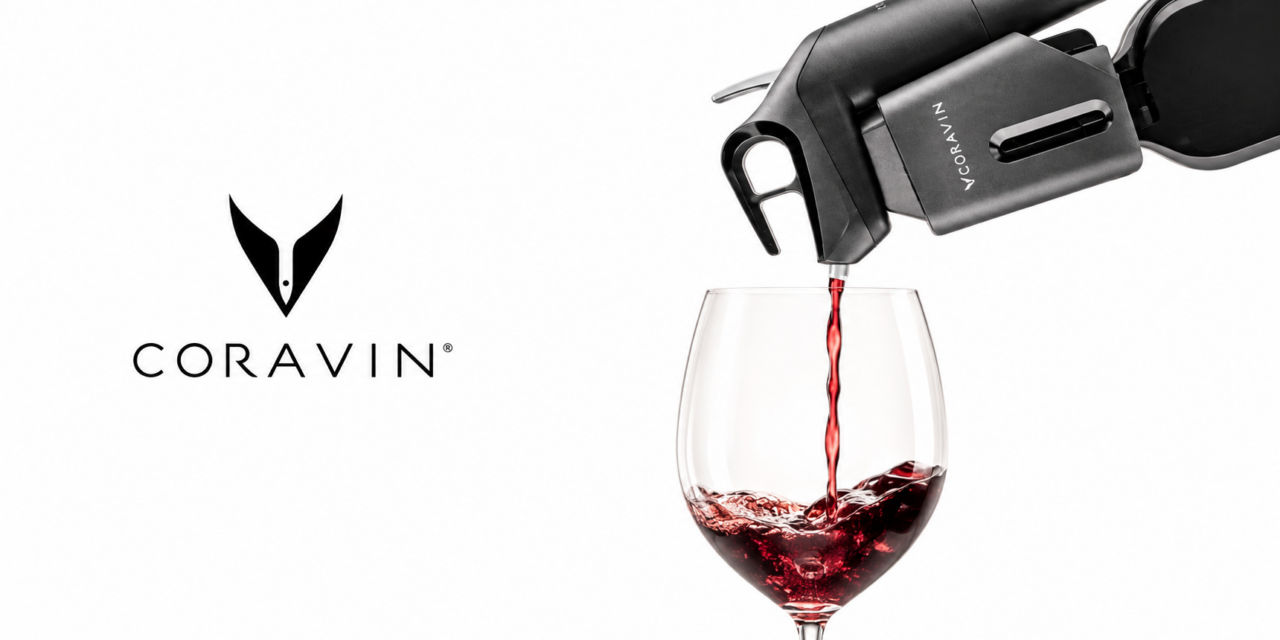
Well, our Bordeaux cruise brought me a lot of memories, but apparently it also sent me home with a mission: MUST. GET. CORAVIN.
I first remember really noticing Coravin in Saint-Émilion. It seemed like every wine shop had one—or something very similar—and I still remember the impression it made the first time I saw it. I was like, #wha? You can do that? I also somehow remember the whole thing in slow motion. I guess like… love at first sight…(?)
And if you haven’t guessed it, of course I got one. I LOVE my Coravin. I heart Coravin. Coravin and I are doing just fine. But after my slightly impulsive purchase, the more I thought about it, the stranger the whole idea actually became. For centuries, drinking wine had one fairly unavoidable first step: open the bottle. #Pop, the cork coming out, and well… you’ve officially committed.
Then somebody apparently decided: But do we have to?
Apparently, No. We Don’t.
The idea behind Coravin began with Greg Lambrecht, a medical-device inventor with a background in mechanical engineering and medical technology. In the late 1990s, his wife was pregnant and had stopped drinking wine (well… yes, she better), which apparently left Lambrecht with a very specific problem: if he wanted a glass, he either had to open an entire bottle himself or simply not drink it. For someone with a collection of bottles he didn’t necessarily want to finish—or waste—that wasn’t exactly ideal. #TheStruggle
So, naturally, he did what any of us would do… he used his medical-device engineering background to invent an entirely new way of getting wine out of a bottle without removing the cork.
You know. The obvious solution.
Personally, it gets me inspired to see how inventive people can get when they find themselves in interesting situations—to not call it something else. And in Lambrecht’s case, his background ended up being pretty useful here. He already had experience working with needles used in medical devices (#AhaMoment), and began experimenting with whether a similar concept could extract wine without disturbing what remained inside the bottle—or, most importantly, introducing wine to one of its biggest preservation enemies: oxygen.
Early prototypes eventually led to a system that could pass a thin needle through the cork, extract the wine, and replace the space left behind with argon, an inert gas that helps protect the remaining wine from oxygen.
And this is the part that still gets me: once the needle comes back out, a natural cork can essentially reseal itself #likemagic. Bottle still closed. Wine still inside. And you just drank a glass from it. #wha? Apparently, my Saint-Émilion reaction was justified.
The first commercial Coravin system eventually launched in 2013, turning what started as one man’s very specific I just want one glass problem into an entirely different way of thinking about a bottle of wine.
Because when you think about it, 750 mL is quite the commitment when all you wanted was one glass.
Apparently, This Thing Got Attention
And apparently I wasn’t the only one impressed. In 2022, the Coravin Timeless Three+ landed on Oprah’s Favorite Things list. Whatever your feelings about Oprah may be, appearing on that list is certainly not a quiet little product mention. The feature highlighted exactly what had caught my attention in Saint-Émilion: pouring wine without removing the cork and preserving what remained for much longer.
But Coravin didn’t stop with that original idea. By this point, it had grown into different systems for different kinds of wine drinkers. Timeless remained closest to the original concept, accessing cork-sealed still wine without actually opening the bottle. Pivot took a somewhat simpler approach for wines you planned to revisit sooner, while Coravin Sparkling tackled another problem entirely: preserving Champagne and sparkling wine after opening.
Which made me wonder: at what point did “I don’t want to finish this bottle tonight” become its own little technology category?
Apparently somewhere between #wha? and #whaa??!.
Is This Actually Saving Me Money?
Of course, all of this made me curious about whether Coravin’s sales had actually grown as more people discovered these systems. But dammit—they’re privately held, so I can’t exactly snoop through those balances, today.
But, another but, there’s another financial question we can play with: does buying an expensive gadget to preserve wine actually save you money?
Let’s make up a very unscientific Wine Wednesday household. Because, you know, #winenot?
Say you open a $40 bottle every Wednesday and only want one standard 5-ounce glass. A 750 mL bottle gives you roughly five glasses. Without preservation, let’s assume you manage to drink another glass or two over the next couple of days, but ultimately two glasses’ worth goes unused. That’s about $16 of wine wasted per bottle.
Four Wine Wednesdays later, that’s roughly $64 in a month. Keep the same habit for 52 Wednesdays and you’re looking at about $832 worth of wine in a year that you bought but never actually enjoyed.
Suddenly, the expensive wine gadget doesn’t look quite as expensive.
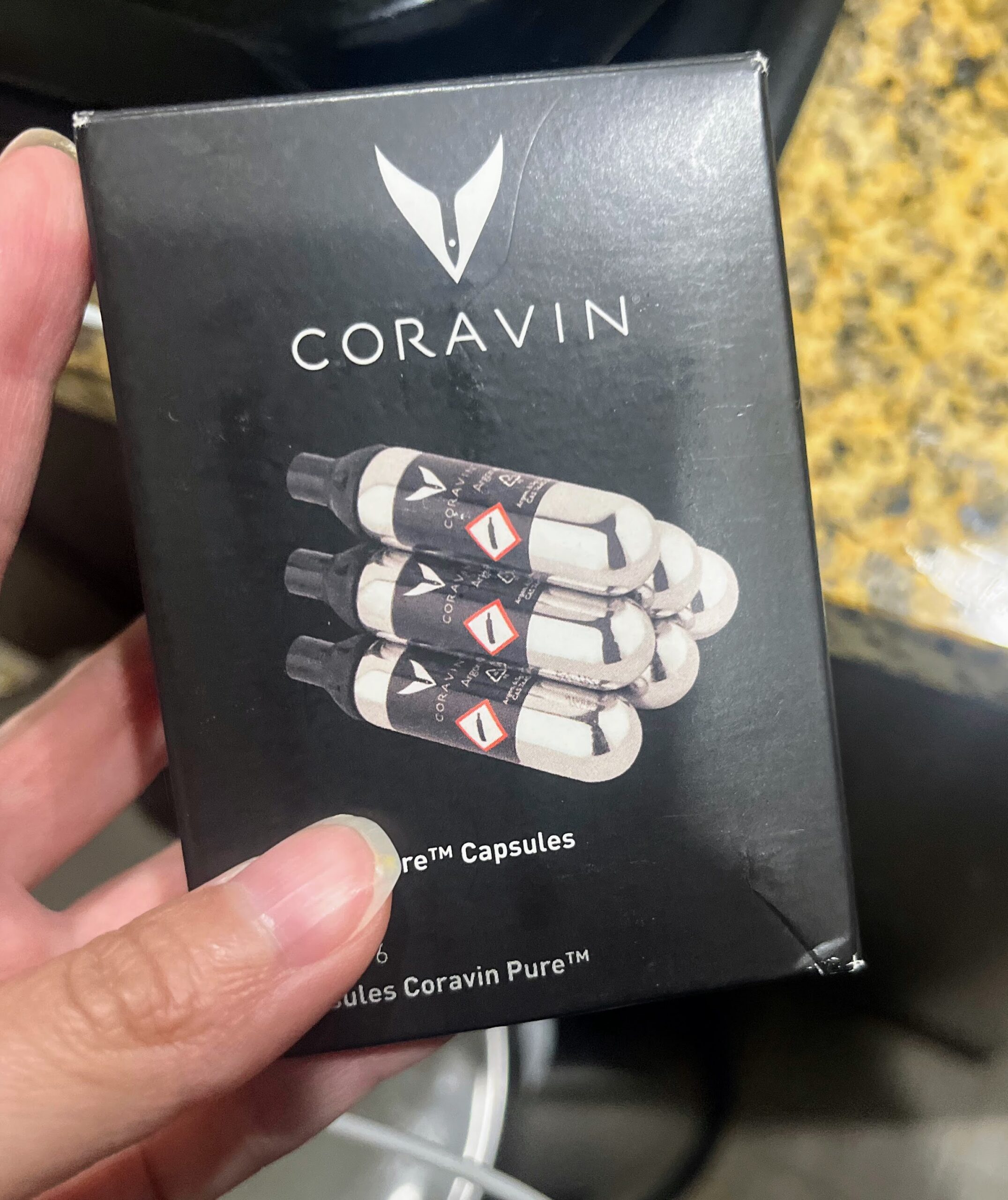
Obviously, real life isn’t this tidy. You might finish the bottle, cook with it, have someone else #happily drink it with you, or simply open less expensive wine. Also, Coravin itself isn’t free to operate—you eventually have capsules and other replacement costs to consider. But the calculation makes the point: the more expensive the bottles you’re opening and the less you drink at once, the easier preservation becomes to justify financially.
Or forget Wine Wednesday. Maybe you’re reading at night and want exactly one glass from a bottle you’ve been curious about—not five glasses, not a reason to invite people over #boo!, and certainly not a race against oxidation. That’s where the value becomes less about saving wine and more about having the freedom to drink the wine you actually want, in the amount you actually want it.
The math gets even more interesting with a $70, $100 or $200 bottle. Maybe the luxury isn’t owning the Coravin. Maybe the luxury was opening an expensive bottle and feeling like you had to finish it simply because you opened it.
Does It Really Pause Wine?
This might actually be the strangest part of the whole thing. We keep using the word preservation, but what we’re really trying to do sounds almost like pausing time. Pour a glass today, leave the rest of the bottle alone, and come back to it weeks, months—or potentially years—later.
According to Coravin, its Timeless system can preserve the remaining wine for weeks, months or even years when used correctly. Greg, from what I read in his own account, took that idea considerably further. In one long-term experiment, he eventually blind-tasted three bottles of the same vintage: an untouched control bottle, one that had been accessed with Coravin nine years earlier, and another first accessed 14 years earlier using one of his original prototypes. According to Coravin’s account, Lambrecht tried to identify which was which—and got it wrong because of how similar the wines tasted.
Well, here’s where my brain splits into two. First, again, #accordingtothem. Second, fourteen years?! Well… that’s commitment. Forty-two percent of U.S. adults weren’t even living with a spouse or partner in 2023, and this man maintained a relationship with a bottle of wine for fourteen years. #Priorities.
And that’s where Coravin becomes particularly interesting for collectors. Opening a bottle normally starts a clock. You can watch a wine develop over the hours or days that follow until eventually oxygen wins and that beautiful bottle starts heading dangerously close to vinegar territory. Don’t forget you’ve also committed to opening it.. A system like this creates another possibility: access a small amount, see where the wine is in its evolution, and leave the rest behind without making the same commitment.
Of course, pause isn’t technically the right word. The wine isn’t frozen in time; Coravin says it can continue evolving naturally inside the bottle. But from the drinker’s perspective, being able to return years later makes “preservation” feel remarkably close.
My Coravin Isn’t Going Anywhere
So after all the history, technology and my completely necessary Wine Wednesday economics, where do I actually stand on the thing?
My Coravin isn’t going anywhere.
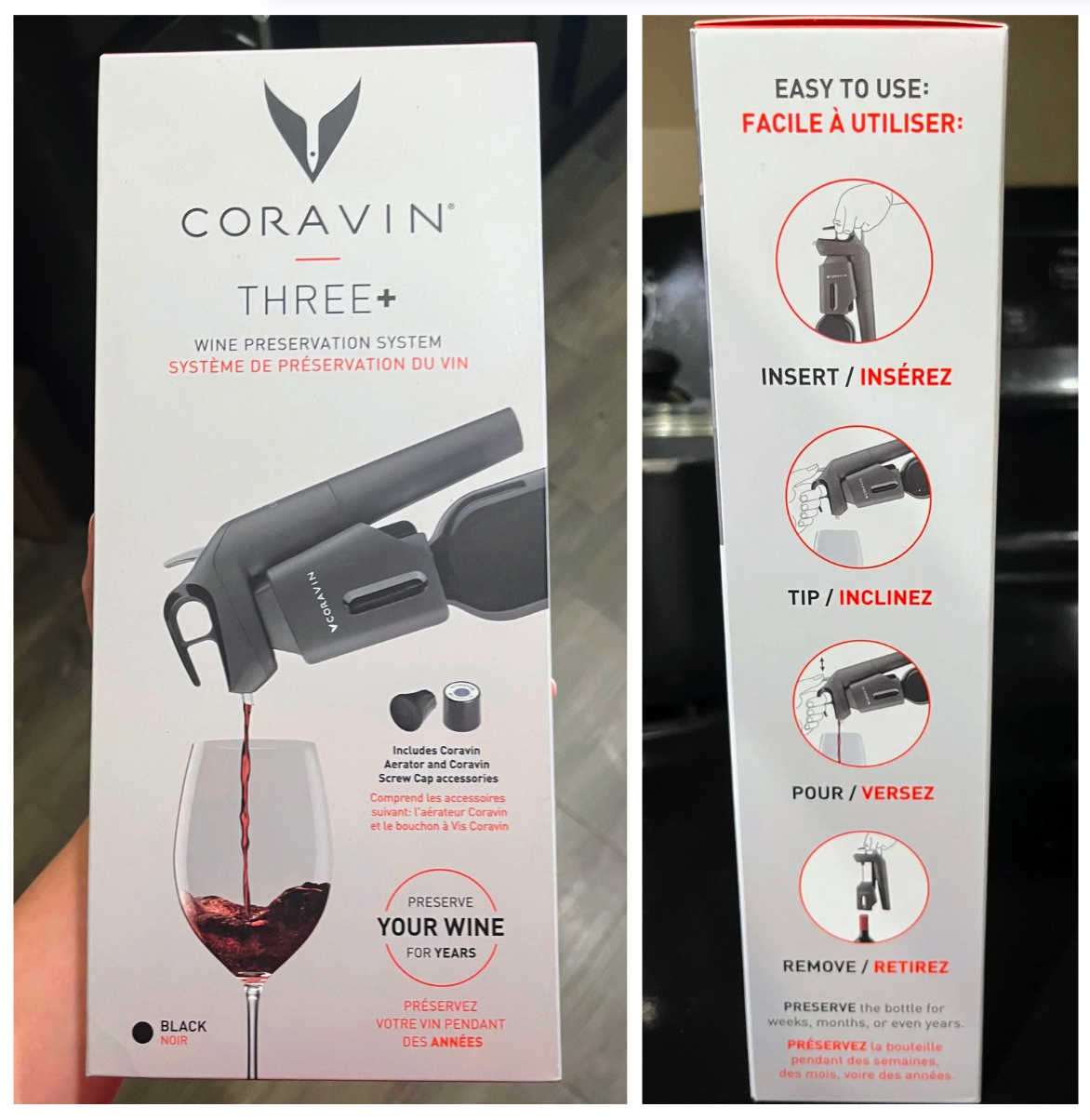
I’ve now used it with enough different wines to know that I genuinely like having the option. Unlike Greg, I’ve had very short-term relationships. I’ve gone back to bottles after 3 months and noticed no difference at all, and I’ve especially appreciated it given the price point. There are also bottles where I don’t bother. If it’s something I know we’re going to finish, I’ll happily pull the cork and hear that little #pop the old-fashioned way.
But owning one has also taught me that Coravin life isn’t quite as simple as needle in, wine out, everybody lives happily ever after… #naaah
There are capsules to replace. Needles aren’t immortal. And then… there are THE. CORKS.
Natural corks can vary, older corks can become more fragile, and not every closure behaves exactly the same way. Coravin itself recommends different approaches for certain closures and even offers a Vintage Needle for older bottles (I’ll just say… it would’ve been nice to know that before). From my own experience, I’ve learned to pay attention, because forcing the issue with an uncooperative cork is a wonderful way to discover that yes, you can bend that needle.
Which brings me, obviously, to probability.
The Completely Unnecessary Coravin Probability Problem
P (Happy Coravin Night) = P (Compatible Cork) × P (Needle Behaves) × P (Wine Was Worth All This)
#Nope, I will not be assigning actual percentages. We’re already drinking wine and doing math.
But probability isn’t certainty. It’s like when I’m cooking and Cosmo—otherwise known as Baba, because apparently every pet I own eventually becomes Baba—is staring at me. “Sorry, Baba. You can’t have this.”
And he tilts his head as if to say, Well, technically, if you drop it…
Unfortunately, based on my historical performance in the kitchen, his decision to remain nearby is statistically justified.

#whaa??!?
And well, Coravin works a little like that for me. The value isn’t guaranteed every single time I pick up the device. It depends on the bottle, the cork, what I’m drinking, how much I’m pouring, and whether preserving the rest actually matters to me. The more often those variables line up, though, the easier the original purchase becomes to justify.
Do I think everyone who drinks wine needs a Coravin? Probably not. But if you’re curious, collect wine, review bottles, drink alone sometimes, or simply hate watching a good bottle slowly become tomorrow’s cooking wine, I understand the appeal.
Mine started with seeing them everywhere in Saint-Émilion and thinking #wha? Years later, it’s sitting in my kitchen—and yes, I still love the thing. Conclusion: Apparently opening the bottle was really optional.